

What Is SEO? A Complete Beginner’s Guide

What Is SEO? A Complete Beginner’s Guide
Search Engine Optimization (SEO) is the practice of enhancing a website’s visibility on search engines like Google, Bing, and Yahoo. By optimizing various elements of a website, businesses can improve their rankings in search results, leading to increased traffic and potential customers. This guide aims to demystify SEO for beginners, explaining its importance and the fundamental strategies involved. Many small to medium-sized businesses struggle to gain online visibility, which can hinder their growth. SEO offers a solution by providing a structured approach to improve online presence and attract more visitors. In this article, we will cover essential strategies for beginners, types of SEO, how search engines rank websites, and effective techniques to implement.
Indeed, the competitive digital landscape underscores the critical role SEO plays in enhancing a business’s online presence and communication with customers.
The Importance of SEO for Business Visibility
Digital transformation and the high level of offline and online competition have a significant impact on business, which emphasizes the relevance and need to implement the successful relevant marketing strategy that includes the search engine optimization (SEO). The SEO increases the business visibility on the Internet in comparison with priority competitors, promotes better communication and interaction in accordance with varied requests of online buyers (customers, clients).
Business optimization in the digital age: Insights and recommendations, A Natorina, 2020
Essential Strategies and Basics for Beginners
To effectively engage in SEO, beginners should focus on several foundational strategies. These strategies not only help in understanding the SEO landscape but also lay the groundwork for more advanced techniques.
- Define Business Goals: Establish clear objectives for what you want to achieve with your SEO efforts, such as increasing website traffic or generating leads.
- Conduct Audience Research: Understand your target audience’s needs, preferences, and behaviors to tailor your content and SEO strategies accordingly.
- Perform Keyword Research: Identify relevant keywords that potential customers are searching for, which will guide your content creation and optimization efforts.
By implementing these strategies, businesses can create a solid foundation for their SEO initiatives, leading to improved online visibility and engagement.
Types of SEO
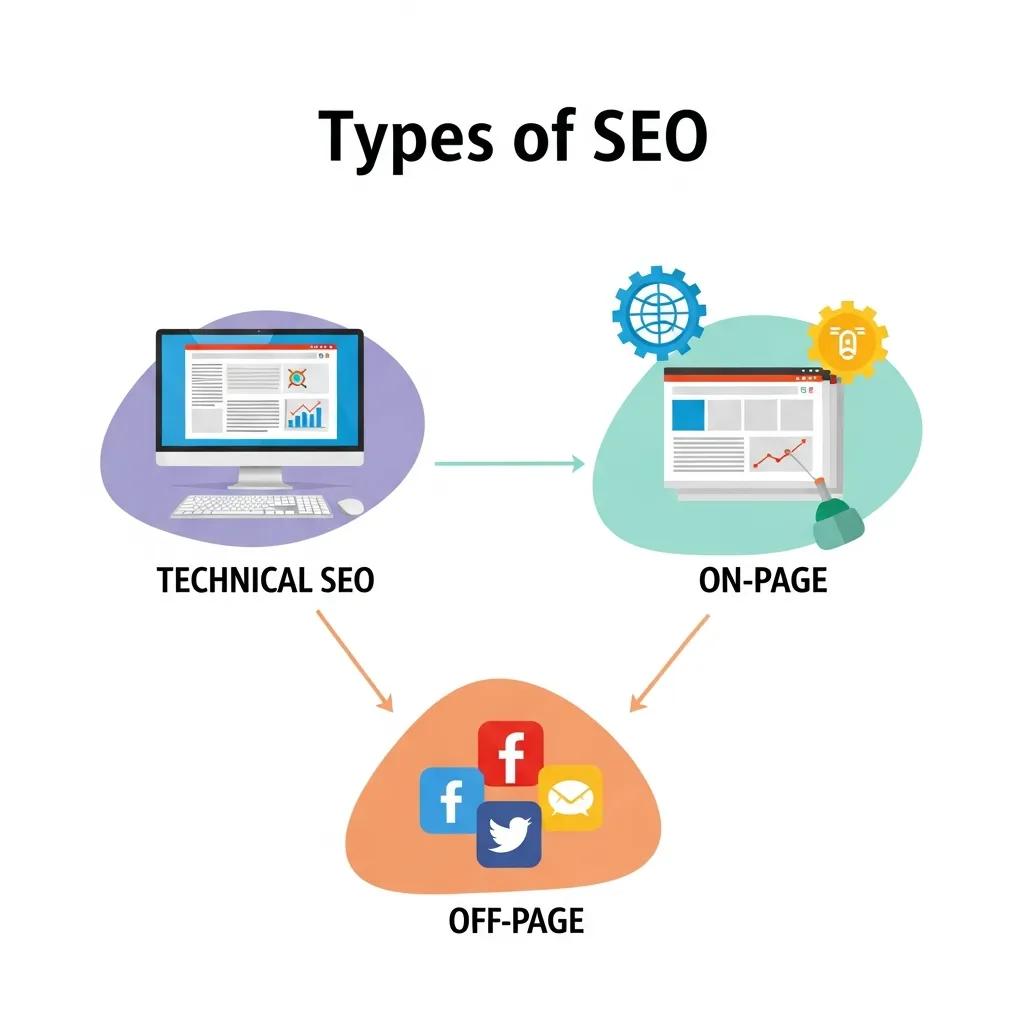
SEO can be categorized into three main types, each focusing on different aspects of optimization.
- Technical SEO: This involves optimizing the technical aspects of a website to ensure that search engines can crawl and index it effectively. Key elements include site speed, mobile-friendliness, and secure connections (HTTPS).
- On-Page SEO: This type focuses on optimizing individual pages on a website. It includes elements like meta tags, headings, and content quality to improve relevance and user experience.
- Off-Page SEO: This refers to actions taken outside of your own website to impact your rankings within search engine results pages (SERPs). This includes link building, social media marketing, and influencer outreach.
Understanding these types of SEO is crucial for developing a comprehensive strategy that addresses all aspects of online visibility.
How Search Engines Work to Rank Websites
Search engines use complex algorithms to determine the relevance and authority of websites. The ranking process involves several key factors:
- Keyword Relevance: Search engines analyze the content of a webpage to determine how well it matches the user’s search query. This includes examining the use of keywords and phrases throughout the content.
- Website Authority: Websites that are considered authoritative, often due to high-quality backlinks from other reputable sites, tend to rank higher in search results.
- User Engagement: Metrics such as click-through rates, bounce rates, and time spent on a page signal to search engines how users interact with a site, influencing its ranking.
By understanding these mechanisms, businesses can tailor their SEO strategies to align with search engine expectations.
What Are the Essential SEO Techniques Every Beginner Should Know?
For beginners, mastering essential SEO techniques is vital for effective optimization. Here are some key techniques to focus on:
- Define Business Goals: Clearly outline what you want to achieve with your SEO efforts, such as increasing traffic or improving conversion rates.
- Audience Research: Understand your target audience’s preferences and behaviors to create content that resonates with them.
- On-Page Optimization: Focus on optimizing meta tags, headings, and content to improve relevance and user experience.
These techniques form the backbone of a successful SEO strategy, enabling businesses to enhance their online presence effectively.
Keyword Research Fundamentals and Best Practices
Keyword research is a critical component of SEO that involves identifying the terms and phrases potential customers use when searching for products or services. Here are some best practices:
- Competitor Analysis: Analyze the keywords your competitors are targeting to identify gaps and opportunities in your own strategy.
- Keyword Tools: Utilize tools like Google Keyword Planner or SEMrush to discover relevant keywords and assess their search volume and competition.
- User Intent: Focus on understanding the intent behind keywords to create content that meets the needs of your audience.
By following these best practices, businesses can develop a robust keyword strategy that drives targeted traffic to their websites.
On-Page SEO Elements: Meta Tags, Headings, and Content Optimization
On-page SEO involves optimizing individual web pages to improve their search engine rankings. Key elements include:
- Meta Tags: These HTML tags provide information about a webpage’s content to search engines. Optimizing title tags and meta descriptions can significantly impact click-through rates.
- Headings: Proper use of headings (H1, H2, H3) helps structure content and makes it easier for search engines to understand the main topics of a page.
- Content Quality: High-quality, relevant content that addresses user needs is essential for effective on-page SEO. This includes using keywords naturally and providing valuable information.
By focusing on these elements, businesses can enhance their on-page SEO and improve their chances of ranking higher in search results.
How Does Technical SEO Enhance Site Performance and User Experience?
Technical SEO plays a crucial role in ensuring that a website functions optimally and provides a positive user experience. Key aspects include:
- Crawlability: Ensuring that search engines can easily crawl and index your website is essential for visibility. This involves optimizing the site’s structure and using XML sitemaps.
- Site Speed: A fast-loading website improves user experience and can positively impact search rankings. Techniques such as image optimization and minimizing server response times are vital.
- Mobile-Friendliness: With the increasing use of mobile devices, having a responsive design is crucial. Google prioritizes mobile-friendly sites in its rankings.
By addressing these technical aspects, businesses can enhance both site performance and user experience, leading to better SEO outcomes.
Key Technical SEO Factors: Site Speed, Mobile Optimization, and Crawlability
Several technical factors significantly impact SEO performance:
- Site Speed Optimization: Fast-loading pages reduce bounce rates and improve user satisfaction. Tools like Google PageSpeed Insights can help identify areas for improvement.
- Mobile Optimization: Ensuring that your website is mobile-friendly is essential, as Google uses mobile-first indexing. This means that the mobile version of your site is considered the primary version.
- Crawlability Improvements: Implementing a clear site structure and using robots.txt files can help search engines crawl your site more effectively.
Focusing on these key factors can lead to improved search rankings and a better overall user experience.
Checklist for Conducting a Technical SEO Audit
Conducting a technical SEO audit is essential for identifying and resolving issues that may hinder a website’s performance. Here’s a checklist to guide the process:
- URL Management: Ensure that URLs are clean, descriptive, and free of unnecessary parameters.
- Content Quality Assessment: Review content for relevance, quality, and keyword optimization.
- Error Monitoring: Regularly check for broken links and server errors to maintain a healthy website.
By following this checklist, businesses can systematically improve their technical SEO and enhance their online presence.
What Are Effective Link Building Strategies to Increase Domain Authority?
Link building is a crucial aspect of SEO that involves acquiring backlinks from other websites. Here are some effective strategies:
- Create Valuable Content: Producing high-quality, shareable content can naturally attract backlinks from other sites.
- Earn Backlinks: Engage in outreach to industry influencers and bloggers to promote your content and earn backlinks.
- Guest Blogging: Writing guest posts for reputable websites can help build authority and generate backlinks to your site.
Implementing these strategies can significantly enhance a website’s domain authority and improve its search rankings.
This emphasis on backlinks is further supported by research highlighting their foundational role in a website’s authority and search engine performance.
Backlinks: Fuel for Higher SEO Rankings & Traffic
Backlinks are the fuel that powers your website’s authority. If you want higher rankings, more traffic, and a stronger online presence, you need a rock-solidbacklink buildingstrategy. Google’s algorithms may evolve, but backlinks remain one of the most influential ranking factors. They act as trust signals, showing search engines that your content is valuable, credible, and worth ranking.
The Ultimate Guide to Backlink Building Strategies (2026 Edition), G Tiwari, 2026
Types of Links and Their Impact on SEO
Understanding the different types of links is essential for effective link building:
- Internal Links: These links connect different pages within your website, helping search engines understand the site structure and improving user navigation.
- External Links: Links from other websites to your site can enhance credibility and authority, positively impacting SEO.
- Backlinks: High-quality backlinks from reputable sites are crucial for improving domain authority and search rankings.
By leveraging these types of links, businesses can enhance their SEO efforts and improve their online visibility.
Best Practices for Building High-Quality Backlinks
Building high-quality backlinks requires a strategic approach. Here are some best practices:
- Create Valuable Content: Focus on producing content that provides real value to readers, making it more likely to be shared and linked to.
- Target Authoritative Sources: Aim to earn backlinks from reputable websites within your industry to enhance credibility.
- Monitor Backlink Profile: Regularly review your backlink profile to identify and disavow any low-quality or spammy links.
By following these best practices, businesses can build a strong backlink profile that supports their SEO goals.
Why Is Local SEO Important and How Can Businesses Optimize for It?
Local SEO is essential for businesses that serve specific geographic areas. It helps improve visibility in local search results, driving foot traffic and online engagement. Here are some key reasons why local SEO matters:
- Enhances Online Visibility: Local SEO helps businesses appear in local search results, making it easier for potential customers to find them.
- Increases Foot Traffic: Optimizing for local search can lead to more visitors to physical locations, boosting sales and engagement.
- Establishes Credibility: A strong local presence can enhance a business’s reputation and trustworthiness in the community.
To optimize for local SEO, businesses should focus on local keyword optimization, Google My Business listings, and local backlinks.
Understanding NAP Consistency and Local Search Signals
NAP consistency refers to the uniformity of a business’s Name, Address, and Phone number across all online platforms. This consistency is crucial for local SEO. Key points include:
- NAP Consistency: Ensuring that your NAP information is consistent across all directories and platforms helps improve local search rankings.
- Impact on Local Search: Inconsistent NAP information can confuse search engines and potential customers, negatively affecting visibility.
- Trustworthiness: Consistent NAP signals to search engines that your business is legitimate and trustworthy.
Maintaining NAP consistency is vital for businesses looking to improve their local SEO efforts.
Strategies for Improving Local SEO Visibility

To enhance local SEO visibility, businesses can implement several effective strategies:
- Optimize Google My Business: Ensure that your Google My Business listing is complete and accurate, including hours of operation and services offered.
- Create Localized Content: Develop content that speaks to local events, news, or activities to engage the community and improve local relevance.
- Manage Online Reviews: Encourage satisfied customers to leave positive reviews, as these can significantly impact local search rankings.
By focusing on these strategies, businesses can improve their local SEO visibility and attract more customers.
What SEO Tools Should Beginners Use to Monitor and Improve Their SEO Efforts?
Several SEO tools can help beginners monitor and enhance their SEO efforts. Here are some recommended tools:
- Google Analytics: This tool provides insights into website traffic, user behavior, and conversion tracking, helping businesses understand their audience.
- SEMrush: A comprehensive SEO tool that offers keyword research, site audits, and competitive analysis to improve SEO strategies.
- Google Search Console: This tool helps monitor website performance in search results, providing insights into indexing issues and search queries.
Utilizing these tools can empower beginners to effectively track and improve their SEO efforts.
Overview of Popular SEO Tools and Their Functions
Understanding the functions of popular SEO tools can help businesses choose the right ones for their needs. Here’s an overview:
- Google Analytics: Tracks website traffic and user behavior, providing valuable insights for optimization.
- SEMrush: Offers a suite of tools for keyword research, site audits, and competitive analysis.
- Google Search Console: Monitors website performance in search results and identifies indexing issues.
By leveraging these tools, businesses can enhance their SEO strategies and improve their online presence.
How to Use SEO Tools for Keyword Research and Performance Tracking
Using SEO tools effectively can streamline keyword research and performance tracking. Here’s how to utilize them:
- Competitor Analysis: Use tools like SEMrush to analyze competitors’ keywords and identify opportunities for your own strategy.
- Keyword Tools: Leverage Google Keyword Planner to discover relevant keywords and assess their search volume and competition.
- Continuous Monitoring: Regularly track performance metrics using Google Analytics to adjust strategies based on user behavior and engagement.
By employing these techniques, businesses can optimize their SEO efforts and achieve better results.
To further enhance your SEO strategy, consider exploring additional free resources that can provide valuable insights and guidance.
Many businesses find that a discovery call can help clarify their marketing needs and identify opportunities for growth.