

What if you could stop guessing and finally see exactly where your marketing dollars are going?
That question sits at the heart of nearly every growth conversation I have with business owners. Not because people are lazy, careless, or unwilling to invest. Quite the opposite. Most businesses are already spending significant time, money, and energy on marketing. They are posting on social media, updating websites, paying for ads, writing emails, asking for referrals, and trying to keep up with the latest digital trends.
The real problem is not effort.
The problem is visibility.
When you cannot clearly see your entire digital footprint, you cannot confidently answer the questions that matter most:
What is actually working?
What is underperforming?
Where is money being wasted?
How do you compare to competitors?
What should you fix first for maximum ROI?
That is why a proper marketing audit matters so much. A strong audit does not just give you a pile of observations. It gives you clarity, accountability, and a strategic roadmap.
This is the thinking behind the Total Online Presence Audit, or TOPA Protocol. It is built to replace reactive, scattered marketing with a 360-degree understanding of how your business shows up online and what needs to happen next.
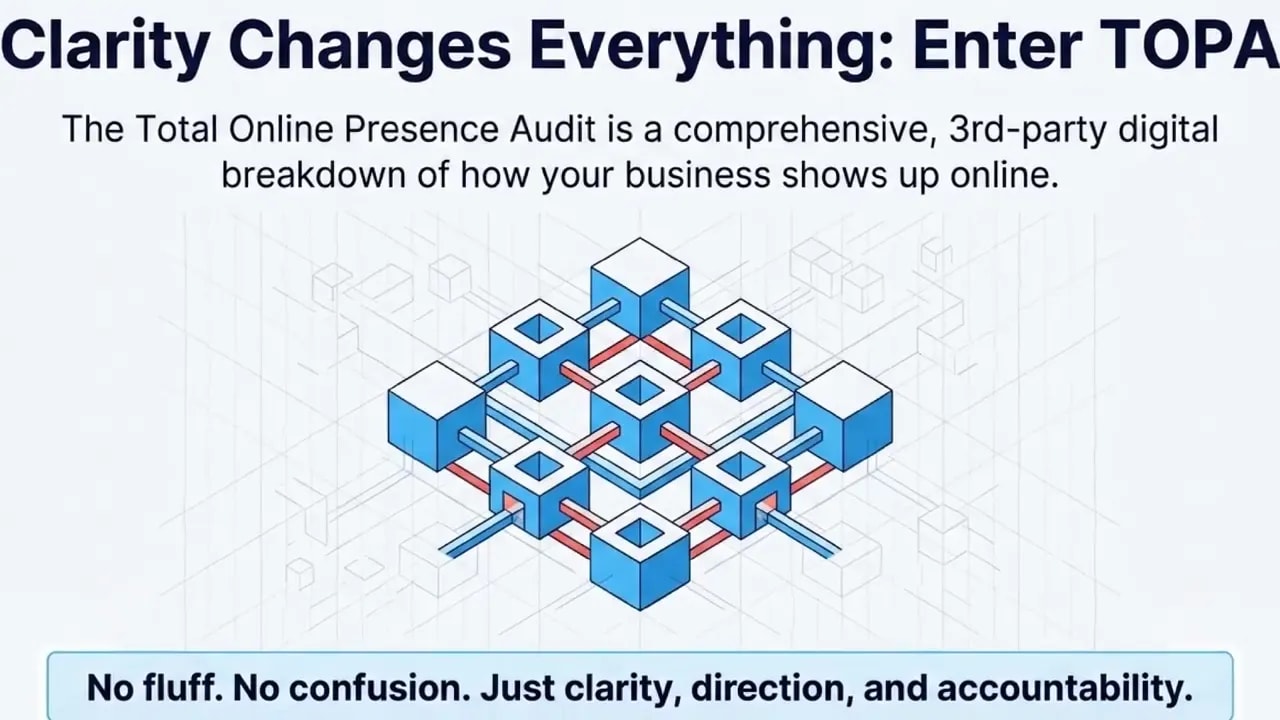
If your current marketing feels hard to measure, difficult to manage, or impossible to connect to real growth, this framework can help you get back in control.
Table of Contents
- 🔍 Why Most Marketing Feels Unclear
- 🧭 What a Total Online Presence Audit Actually Does
- 🏛️ The 4 Pillars of the Architecture of Clarity
- 🌐 The 360-Degree Diagnostic Framework
- 📉 The Hidden Cost of Marketing Without Visibility
- 📊 What You Should Get from a Serious Marketing Audit
- ⚙️ The 4-Step Process to Build a Marketing Roadmap
- 🚀 Moving from Reactive Marketing to Strategic Marketing
- ✅ Is This Kind of Audit Right for Your Business?
- 💼 Why Confidence Changes Everything
- 🧠 A Few Smart Next Steps You Can Take Right Now
- 📈 Stop Guessing and Start Marketing with Clarity
- ❓FAQ
🔍 Why Most Marketing Feels Unclear
Many business owners live in a frustrating middle ground.
They are doing enough marketing to stay busy, but not enough of the right marketing to feel confident. They are seeing activity, but not always results. They are getting reports, but not real insight. And they are often paying invoices without being able to tie them back to specific leads, opportunities, or revenue.
This is where traditional marketing often breaks down.
Too often, marketing becomes a collection of disconnected tactics:
A website redesign here
A few Google Ads there
Some SEO work at some point
Occasional social media posting
A few blogs or email campaigns when time allows
Individually, none of those are inherently bad. In fact, each can be powerful. But when they are executed without a clear diagnostic process and a measurable strategy, they create noise instead of momentum.
That is when businesses begin to “hope for the best” instead of managing with certainty.
And hope is not a marketing system.
A business that wants maximum growth needs more than isolated tactics. It needs a clear view of the full picture. That means understanding not just what you are doing, but how all the moving parts of your online presence are working together, or failing to.
If this sounds familiar, you are far from alone. In fact, the frustration of unclear results is one of the biggest signs that you need a better system. If that resonates, this article on signs you need a marketing expert is a helpful next read.
🧭 What a Total Online Presence Audit Actually Does
A total online presence audit is not just a website review. It is not just an SEO scan. It is not a paid ads checkup or a social media scorecard.
It is a comprehensive assessment of your digital ecosystem.
The goal is simple: provide an honest assessment of where your business stands online and create a prioritized roadmap for where to go next.
In practical terms, that means uncovering:
How your brand appears across the web
Where users experience friction
Which channels are contributing to visibility and lead generation
Where hidden gaps are costing you opportunities
How your competitors are outperforming you, if they are
Which improvements should be tackled first
The most important shift here is that an audit moves you from assumption to evidence.
That is why TOPA is framed as a form of marketing intelligence, not just marketing activity. The difference matters. Activity can be expensive and misleading. Intelligence helps you invest with purpose.
🏛️ The 4 Pillars of the Architecture of Clarity
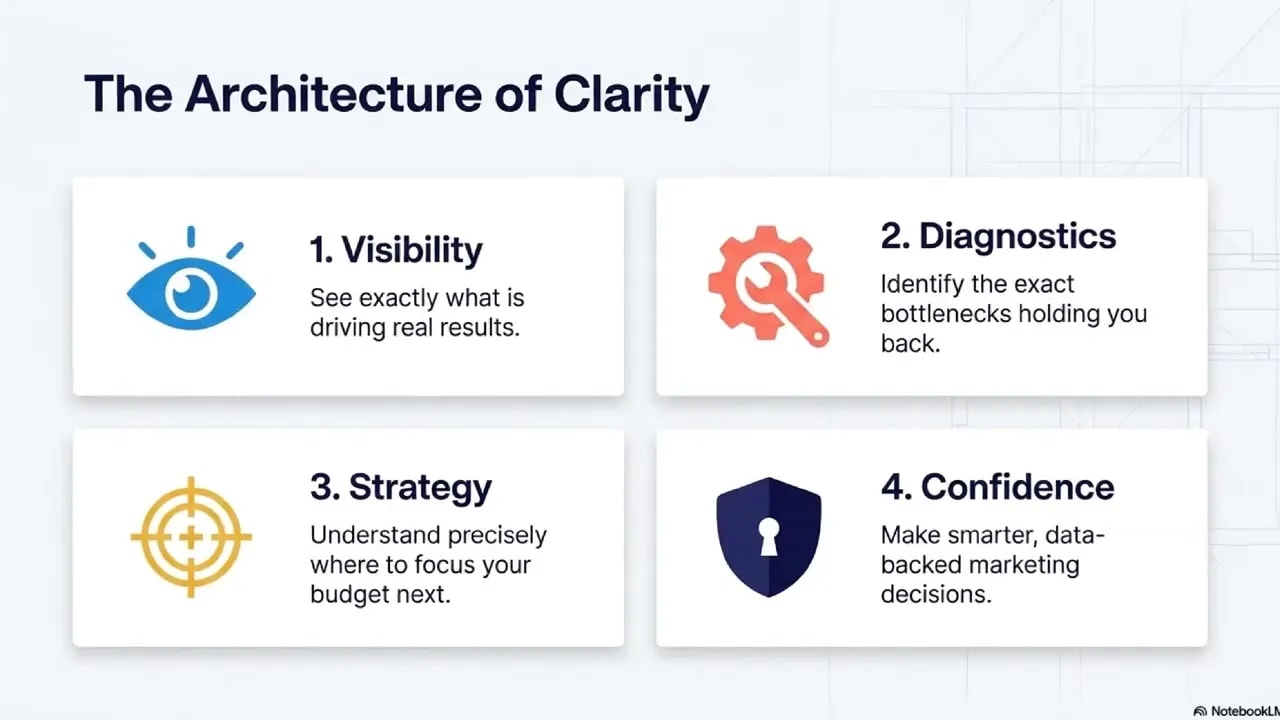
The TOPA Protocol is built on what can be called the Architecture of Clarity. That structure rests on four pillars:
Visibility
Diagnostics
Strategy
Confidence
Each pillar matters on its own. Together, they create the foundation for more intelligent marketing decisions.
Visibility
You need to know exactly how your business appears online.
Not how you think it appears. Not how it looked two years ago. Not how your internal team assumes customers find you. You need a current, objective view of your online presence.
Visibility covers the way your website, search presence, content, profiles, reviews, listings, and ads are presenting your business to the marketplace.
If your visibility is weak, inconsistent, or confusing, every other marketing effort suffers.
Diagnostics
Once visibility is established, diagnostics go deeper.
This is where you analyze what is working and what is broken. A good diagnostic process reveals technical issues, messaging gaps, ranking weaknesses, conversion bottlenecks, content problems, and paid media inefficiencies.
Diagnostics are where assumptions get challenged.
Sometimes a business believes its issue is low traffic, when the real problem is poor conversion. Sometimes it believes ads are failing, when the landing page is the problem. Sometimes it believes social media is not worth it, when the real issue is inconsistent content strategy.
Strategy
Clarity without direction is not enough.
That is why the third pillar is strategy. Once the data is in, you need a plan that is tailored to your business, your market, and your growth goals.
A strategic marketing roadmap prioritizes action. It helps you avoid trying to fix everything at once. It tells you what to do first, what can wait, and where investment is likely to produce the strongest return.
If strategic planning is an area where your business needs more structure, you may also want to explore this guide on how to build an effective small business marketing plan.
Confidence
This is the outcome business owners are really after.
Confidence means knowing your next move is based on evidence, not guesswork. It means being able to invest your marketing dollars intentionally. It means you stop reacting and start steering.
When confidence is present, marketing becomes less stressful and more accountable. Decisions get faster. Budgets get smarter. Growth gets easier to manage.
🌐 The 360-Degree Diagnostic Framework
For an audit to be truly useful, it has to examine every meaningful corner of your digital world. A partial audit often creates false confidence because it only measures one slice of performance.
The TOPA approach uses a 360-degree diagnostic that looks at four major areas:
Website and user experience
Search and AI rankings
Content and social presence
Paid advertising and competitive landscape
Here is why each one matters.
Website and User Experience
Your website is often the central hub of your online presence. It can also be one of the biggest points of friction if it is outdated, confusing, slow, or poorly structured.
An audit should look beyond appearance and evaluate function. Important questions include:
Is the site easy to navigate?
Does it load quickly?
Is it mobile-friendly?
Does the messaging clearly communicate value?
Are there obvious conversion opportunities?
Do users know what to do next?
A beautiful website that does not convert is still underperforming.
If you want to go deeper on this area, two highly relevant resources are the essential elements your website must have and why page speed is so significant.
Search and AI Rankings
Search behavior is changing. Traditional rankings still matter, but businesses also need to pay attention to AI-powered search experiences and how they are being surfaced in those environments.
An audit here should assess:
Organic search visibility
Local search presence
Keyword positioning
Google Business Profile strength
Competitive positioning in local search
How your business appears in emerging AI search results
This is one of the easiest places to lose business without realizing it. If a competitor is consistently appearing above you for your most valuable services, they are taking attention, clicks, and leads that might otherwise be yours.
For businesses trying to improve local rankings, the local SEO playbook and this article on measuring Google Business Profile success are both worth reading.
Content and Social Presence
Content tells the market who you are, what you know, and why people should trust you. Social channels amplify that message and keep your business visible between major buying moments.
But content and social can become extremely wasteful if they are not aligned with strategy.
A proper audit looks at whether your content is relevant, consistent, discoverable, and supportive of your sales process. It also examines whether your social presence strengthens trust or simply creates activity without business value.
This includes questions like:
Are you publishing content that matches customer intent?
Are you addressing the questions your market actually asks?
Is your brand voice consistent?
Are your social platforms active and credible?
Is your content helping SEO, authority, and lead generation?
If content is part of your growth plan, you may also find value in how to create content your audience will love and five content marketing mistakes that cost you customers.
Paid Advertising and Competitive Landscape
Paid advertising can accelerate growth, but it can also burn through budget quickly when the strategy is unclear.
An audit should evaluate your current paid campaigns and the broader competitive environment around them. That means looking at:
Where ad spend is going
Whether messaging aligns with user intent
How campaigns support the buyer journey
What competitors are doing in search and paid spaces
Whether there are obvious gaps or opportunities
The point is not simply to ask whether ads are running. The point is to ask whether they are strategically helping the business grow.
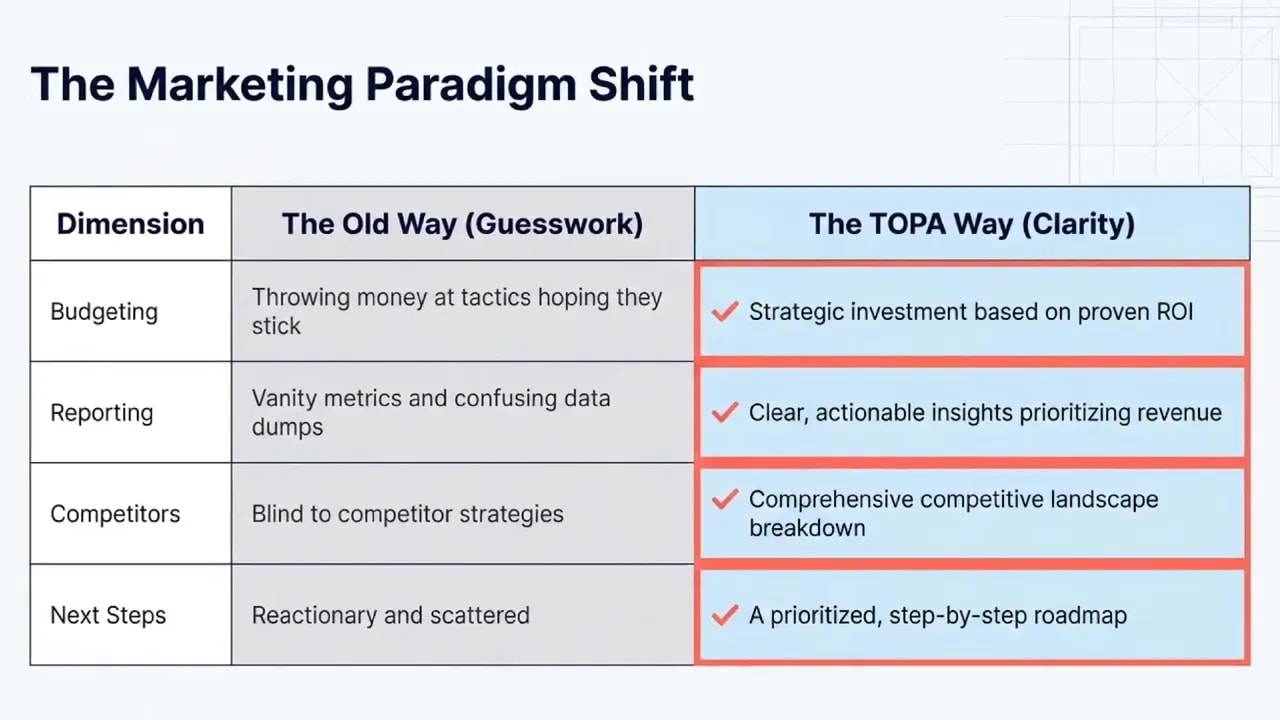
📉 The Hidden Cost of Marketing Without Visibility
One of the most dangerous things in business is spending money on marketing that feels productive but is not accountable.
That hidden cost shows up in several ways:
Paying for tactics that do not support a larger strategy
Missing conversion opportunities on your website
Losing leads to faster, clearer competitors
Funding channels that generate attention but not revenue
Ignoring technical or messaging issues that quietly suppress performance
Most businesses do not feel this all at once. They feel it gradually.
Lead quality slips a bit. Website inquiries flatten. Cost per lead inches up. Social media remains busy but disconnected from sales. Search rankings drift. Competitors seem to be getting stronger. Eventually, the business starts asking why marketing feels so expensive and so hard to measure.
That is exactly why clarity matters. Because every unresolved blind spot has a cost.
This also connects to a broader business reality: waiting has a price. If you have been putting off a more serious look at your marketing, read the hidden cost of waiting.
📊 What You Should Get from a Serious Marketing Audit
A high-quality audit should not leave you with vague advice like “post more” or “improve SEO.”
It should deliver practical, decision-ready output.
At minimum, you should expect four things:
A Comprehensive Audit Report
This report should document the findings clearly and thoroughly. It should show you where your strengths are, where your weaknesses are, and how your digital presence is performing across the major channels that matter.
A Prioritized Action Plan
Not everything needs to be fixed immediately. A useful audit helps you identify the highest-value next moves first.
This is critical because businesses often get overwhelmed by trying to improve everything at the same time. Prioritization turns complexity into momentum.
Competitive Benchmarking
You need to know where you stand in your market. Benchmarking helps you understand whether your challenges are internal, external, or both.
It also reveals where competitors may be winning visibility, attention, and trust.
Clear ROI Pathways
Perhaps most importantly, a strong audit should help you see how future investment can connect to business outcomes. That means every dollar spent moving forward has a defined purpose.
When an audit accomplishes that, it stops being a report and starts becoming a decision-making tool.
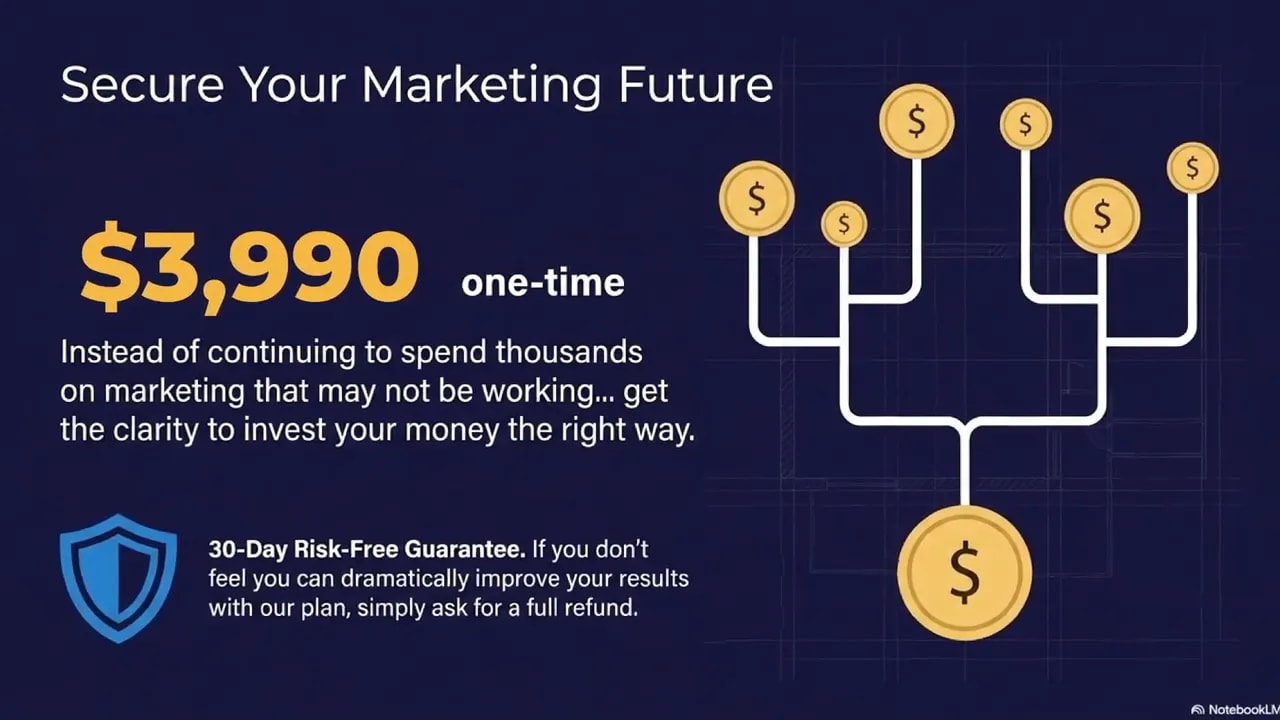
⚙️ The 4-Step Process to Build a Marketing Roadmap
The strongest audits are not just analytical. They are procedural. There is a clear path from initial assessment to strategic action.
The TOPA process follows four straightforward steps.
1. Request the Audit
The process begins with the business raising its hand and saying, “We want the truth. We want clarity.”
This first step sounds simple, but it matters. It signals a shift away from guesswork and toward evidence-based decision-making.
2. Conduct a Deep Diagnostic
This is where the team examines the full digital footprint of the business. The review is thorough and designed to uncover issues, opportunities, and patterns across your online presence.
The key word here is deep. Superficial audits miss too much. You need enough analysis to produce real insight.
3. Build a Customized Strategic Roadmap
Once the findings are in, the next step is turning them into a tailored strategy.
This roadmap is where clarity becomes useful. It prioritizes recommendations and organizes the next moves in a practical way.
4. Review the Findings in an Executive-Level Presentation
The final step is not simply emailing over a report. It is walking through the findings, recommendations, and opportunities clearly so decision-makers understand exactly what the business is facing and what should happen next.
That matters because insight only has value when it is understood and acted on.
🚀 Moving from Reactive Marketing to Strategic Marketing
This may be the single biggest mindset shift in the entire process.
Reactive marketing is fragmented. It happens in response to pressure, trends, or urgency. A sales dip leads to sudden ad spend. A competitor posts more, so your team scrambles to post more. A website looks dated, so it gets redesigned without first understanding traffic, conversion behavior, or search performance.
Strategic marketing is different.
Strategic marketing is measured, intentional, and prioritized. It is based on diagnosis, not panic. It uses benchmarks, not assumptions. It aligns spending with outcomes and builds from a clear understanding of where the biggest leverage points are.
That shift from reactive to strategic is where a lot of growth businesses get unstuck.
And it is also how you escape what many businesses fall into: the tactic trap. If that sounds familiar, read the marketing tactic trap for a deeper look at how scattered execution hurts results.
✅ Is This Kind of Audit Right for Your Business?
Not every business is ready for this kind of work, and that is important to say clearly.
A total online presence audit is right for businesses that are:
Serious about growth
Frustrated with unclear marketing results
Willing to invest with intention
Ready to act on real insights
Looking for clarity, not shortcuts
It may not be the right fit for businesses that are chasing quick fixes, looking for a magic button, or not prepared to make decisions based on the findings.
An honest audit can be incredibly powerful, but only if the business wants the truth and is willing to use it.
💼 Why Confidence Changes Everything
Business owners often think they need better marketing tactics.
Sometimes they do.
But often what they need first is confidence.
Confidence changes the way you lead, budget, prioritize, and evaluate marketing. Instead of second-guessing every line item, you can make informed decisions. Instead of wondering whether to pause or increase spend, you can assess channels based on clear evidence. Instead of feeling like marketing is a black box, you can manage it like a growth system.
That is why confidence is not a soft concept here. It is an operational advantage.
It helps you:
Make faster decisions
Reduce wasted spend
Improve accountability
Align teams around priorities
Invest with far more purpose
When confidence enters the marketing process, business owners stop feeling stuck and start feeling in control again.
🧠 A Few Smart Next Steps You Can Take Right Now
Even before commissioning a full audit, there are a few practical things you can do immediately to pressure test your marketing.
Review Your Last Three Months of Marketing Spend
Pull your recent invoices and ask a simple question: Can I tie these costs to specific leads or outcomes?
If the answer is no, that is a sign you need more clarity and better attribution.
Search for Your Primary Service in Your City
Look at who appears ahead of you in search, especially in evolving AI search experiences and prominent local placements.
If competitors are consistently outranking you, it is worth finding out why.
Evaluate Your Website Like a Prospect Would
Open your site on a phone. Try to find your main service, your differentiator, and your contact path in under 10 seconds. If that is harder than it should be, there may be a conversion problem hiding in plain sight.
Compare Your Messaging Across Channels
Check your homepage, Google Business Profile, social media bios, and recent content. Do they tell a clear, consistent story about what you do and who you help?
If not, your brand may be creating friction before people ever speak to you.
Use Supporting Resources to Strengthen Weak Areas
For broader guidance, the marketing blog offers a wide range of articles on SEO, content, websites, advertising, and strategy.
If your focus is AI and how it affects online visibility and customer experience, two helpful reads are five easy ways to use AI in local business and how to elevate customer experience with AI.
📈 Stop Guessing and Start Marketing with Clarity
Growth does not come from doing more random marketing.
It comes from understanding your real position, diagnosing what matters most, and acting on a clear strategic roadmap.
That is the value of a total online presence audit. It brings your full digital footprint into focus. It shows you how you compare against competitors. It identifies the hidden gaps costing you money. And it gives you a practical plan to improve your marketing ROI with purpose.
In other words, it replaces hope with clarity.
If your business is ready for a more complete, honest assessment of how it shows up online, explore the Total Online Presence Audit or book a free discovery call to discuss the right next step.
Because your competitors are not waiting, and your marketing should not be running on guesswork.
❓FAQ
What is a total online presence marketing audit?
A total online presence audit is a comprehensive review of how your business appears and performs online. It examines your website, search visibility, AI and local rankings, content, social presence, paid advertising, and competitive positioning to identify strengths, weaknesses, and next steps.
How is a marketing audit different from a website audit?
A website audit focuses primarily on your site’s structure, performance, and user experience. A marketing audit is broader. It evaluates the entire digital ecosystem around your business, including SEO, content, social channels, paid ads, and how your brand compares to competitors.
Who should get a marketing audit?
A marketing audit is ideal for business owners who are serious about growth, frustrated by unclear results, and ready to invest based on evidence instead of assumptions. It is especially valuable when marketing activity is happening but ROI is hard to measure.
What does the TOPA Protocol include?
The TOPA Protocol includes a 360-degree diagnostic of your digital footprint, a comprehensive audit report, competitive benchmarking, a prioritized action plan, and a strategic roadmap presented in a clear executive-level review.
How do I know if my marketing budget is being wasted?
If you cannot clearly connect recent marketing spend to leads, conversions, or measurable business outcomes, there is a strong chance some of that budget is underperforming. A proper audit helps uncover where spending is effective and where it is not.
Why does competitor benchmarking matter in a marketing audit?
Benchmarking shows where your business stands in the real market, not just in isolation. It helps you see who is outranking you, where competitors may be winning attention, and what opportunities exist to close the gap or pull ahead.
Can a marketing audit help improve ROI?
Yes. A strong audit improves ROI by identifying hidden gaps, reducing wasted spend, clarifying what is working, and prioritizing the actions most likely to create meaningful business results. It makes future marketing investments much more intentional.
What should I do before requesting a marketing audit?
A good starting point is to review your last three months of marketing expenses, assess whether you can tie them to outcomes, and search for your primary services online to see how you compare to competitors. Those quick checks will often confirm whether a deeper diagnostic is needed.
SCHEDULE A COMPLIMENTARY STRATEGY SESSION
Ask your marketing questions, get expert answers, book your free session now!