Google Changes And How They Affect You
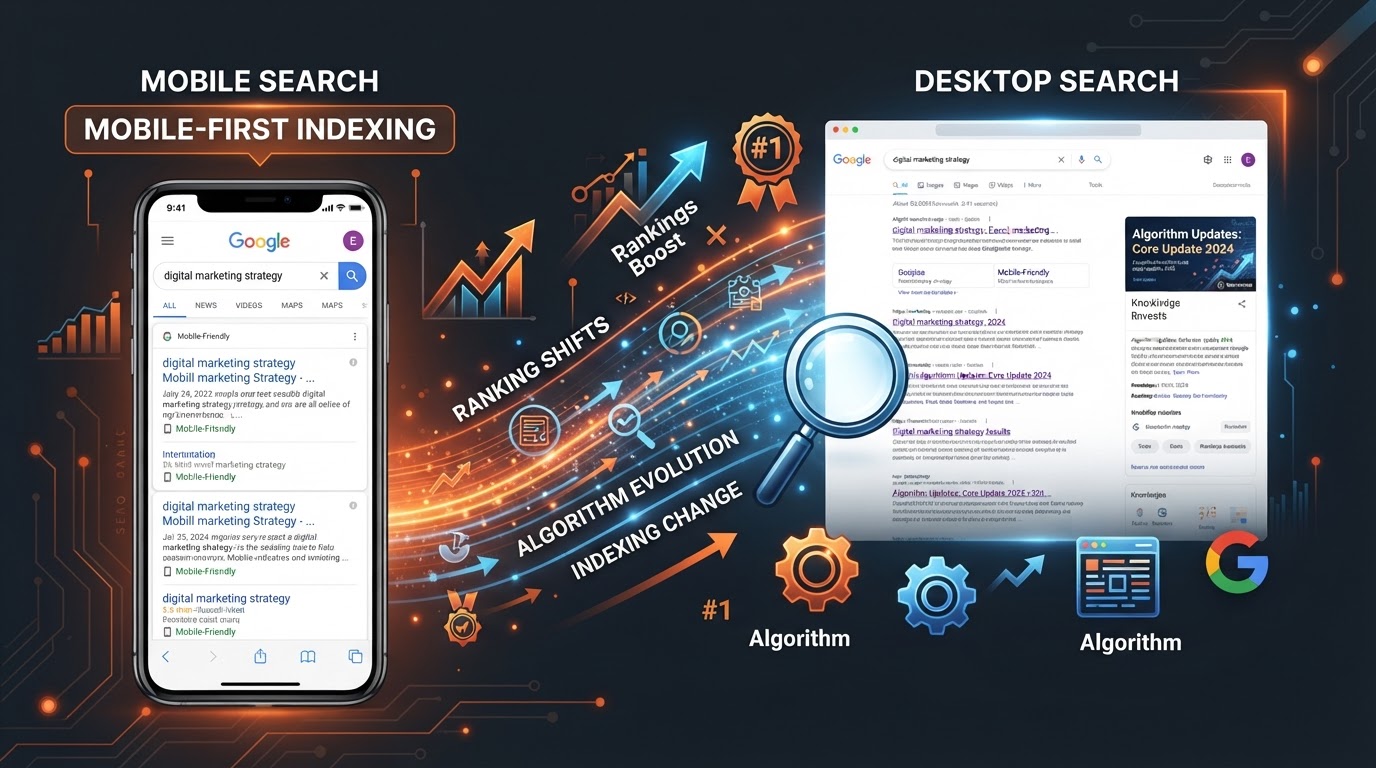
Updated August 19, 2026 — Google's algorithm has evolved significantly since this article was first published. Mobile-first indexing is now the default, AI-powered search (SGE, overviews) is reshaping results, and Core Web Vitals remain critical. We've refreshed this article to reflect current best practices while preserving the core principles.
What's Changing with Google (and How It Affects You)
Recently announced Google changes will affect your business. But trying to pin down Google's algorithm is a little like trying to nail Jell-O to a wall. Why would you even try? It's just going to fall off the nail anyway.
If that's how you feel, it's understandable. It can be frustrating. You want your site to appear on the first page of Google's search results. But, the algorithm isn't public, and Google is notoriously close-mouthed about it. But guess what?
You can't stop trying.
Ranking high on Google is a must for every local business. The businesses that appear in the top five spots on Google get the lion's share of the traffic. If you miss the mark, you'll be missing out on business and losing that business to your competition.
With that in mind, here are the most important things you need to know about what's changing with Google — and why you should care.
#1: Google Searches Are Mobile-First
This first one is a big one and you can expect to have a big impact on your business. Google has a huge advantage in mobile search. One estimate is that while Google garners approximately 63% of desktop services, it grabs a whopping 95% of mobile search. People with smartphones really need to go out of their way to use a search engine other than Google.
Google knows that people are more likely to search local business on their mobile devices than on a desktop, and it also recognizes the importance of the "near me" search term when people are out and about.
You want to make sure that your business grabs one of those top spots in mobile search? Here are some quick tips to help you ensure that it does:
- Claim and optimize your Google Business Profile listing and check your other online listings for accuracy (these include other online directories and social media profiles)
- Make sure that your website is mobile-optimized and has a responsive format that will adjust to any device
- Produce plenty of mobile-friendly content for your site
- Utilize Google Search Console tools to ensure Google isn't seeing mobile errors on your website
These things will ensure that Google knows your site is useful to mobile users.
#2: SEO Is Your Key to Showing Google Your Relevance
It's no secret that Google prioritizes the user experience over everything else. That's why keywords have diminished in importance while things like LSI (Latent Semantic Indexing), authority backlinks, and local reviews have risen as indicators of a site's relevance and usefulness.
Keywords may not have the impact they once had, however they are still very important. But there are also other elements of SEO that are essential to ensuring that Google knows what your site's about and why users will care about it.
The first thing is creating optimized content that's highly engaging and useful to your site visitors. The more recent the content the better. If your site doesn't have a blog, it should — and you shouldn't wait to add one. Every blog post you write gives Google another reason to crawl your site, and users another reason to visit.
The second thing is your data. If you're not already drilling down into your data from Google Analytics and social media, you should start. Those numbers aren't just numbers — they're a map that can show you the kind of content that's most appealing to your followers.
#3: Content Still Reigns Supreme
Speaking of content, there's simply no way to overstate its importance. While you'll still need to optimize your site for keywords and use appropriate tags, your content is what will ultimately make a user decide to stay on your site or — alternatively — to click the dreaded back button and try again.
The truth is that posting content regularly is likely to garner you up to five times the results (yes we said 5X) that you'll get without regular content updates. That's not a statistic you can afford to ignore — and you can be sure that Google will notice if you don't create content that users care about.
Of course, content can take many forms. It might include:
- Blog posts on your website
- Curated content that you post on your social media pages
- Text messages you send to people who have opted in to receive them
- Videos you post on YouTube
- Tweets you send out
- The emails you send to your subscribers
Google won't see all of these directly but that doesn't mean they won't have an impact on your Google search rank. If a text message prompts a mobile user to visit your site, Google will notice the traffic — and your site's ranking may ultimately be affected by it.
#4: Video Content is Huge
Finally, video marketing continues to grow in importance. We've been talking about the rise of video for a while now, but its importance continues to increase. Let's start with this:
By 2022, 82% of all global IP traffic was video traffic.
Whoa. We're not talking about a tiny chunk of traffic here. Video traffic was already at 73% as of 2016 and its rise is ongoing.
Visitors to your site are four times (yes 4X) more likely to watch an explainer video about your product or service than they are to read a page of text. Of course, there are exceptions — but you can't afford to ignore the fact that preferences have changed.
The good news is that video is cheaper and easier than ever to produce. You can pay big bucks for a professional videographer to make videos for your business, but you don't need to. Even a decent smartphone camera can shoot video that's good enough to represent your business.
Some videos — the more formal ones that appear on your site, for example — might benefit from high production values. But the videos that you post on social media can be casual and short — and don't forget about live video as an option, too.
Now, about that Jell-O…
Yes, it's a pain to keep up with Google's constant changes. But ultimately, getting a nail through that Jell-O — even if you have to do it again tomorrow — is worth the time and effort. It's the thing that will bring new visitors to your site — and help your business earn more revenue.
FAQ
How often does Google update its search algorithm?
Google makes thousands of algorithm updates per year, with most being minor. Major "core" updates typically happen several times a year and can significantly impact search rankings. Google also rolls out specific updates targeting areas like page experience, helpful content, and spam. Staying informed about these changes and working with an SEO professional helps you adapt quickly.
What is mobile-first indexing and why does it matter?
Mobile-first indexing means Google predominantly uses the mobile version of your website for indexing and ranking. Since 2019, Google has used mobile-first indexing for all new websites, and by 2021 it was applied to all sites. If your website isn't mobile-friendly or has content missing on mobile that exists on desktop, your rankings could suffer.
Does video content really help with SEO?
Yes. Video content increases time on page, reduces bounce rates, and can appear in Google's video search results and SERP features. Embedding YouTube videos on your pages can also drive traffic from YouTube, the world's second-largest search engine. Video-rich snippets can improve click-through rates from search results.
How do I keep up with Google's algorithm changes?
Follow reputable SEO publications like Search Engine Journal, Search Engine Land, and Google's own Search Central blog. Work with an SEO agency that monitors algorithm updates and adjusts strategies proactively. Focus on creating high-quality, user-focused content and maintaining technical SEO best practices — these fundamentals remain stable regardless of algorithm changes.

Duct Tape Marketing Master Certified Consultant & AI Search Expert.
View Ian's Expert Profile & Credentials →